In Episode 3 of The Urban Permaculture Podcast, Heather discusses the reasons why soil is one of the most important parts of growing successfully in a garden. Tune in to Spotify to hear about this important topic.
If you are wanting to test your own soil, HERE is a kit that will give you all of the recommendations for how to improve your soil health! Soil improvement is key for gardeners wanting to maximize harvests!
Episode 2 of The Urban Permaculture Podcast focuses directly on permaculture. Learn the differences between planting an annual vegetable garden and growing a food forest. Listen along as Heather discusses the ways Hogs and Hens Urban Farm incorporates both to maximize harvests! Check this episode out on Spotify.
Welcome to our very firsts episode of The Urban Permaculture Podcast! You can find The Urban Permaculture Podcast on all major podcasting platforms such as Spotify. To listen on Spotify click HERE.
In this episode, Heather talks about all of the things we are currently doing and currently have planned for Hogs and Hens Urban Farm.
Currently, Hogs and Hens Urban Farm raises a huge variety of fresh vegetables, fruits, and herbs. In addition to that, we currently have a worm farm set up to make our own organic compost through vermicomposting. We are adding a flock of laying hens to our farm in the spring of 2023, as well as expanding to include an apiary where we will be raising honey bees. In addition to these, we have a small ornamental pond on the property with a variety of comets living inside it to help prevent mosquito breeding.
We recently purchased two vacant lots that are connected to our current property and we are beginning our very own permaculture food forest on that property that will include fruit and nut trees, expand our berry patches, and have large areas of perennial edible plants. We will also be adding a pond to this property at a later date.
Hogs and Hens uses integrated pest management practices in addition to employing a no till method of gardening. Everything you find on our farm is organically grown, and we create our own compost to use to amend our soil.
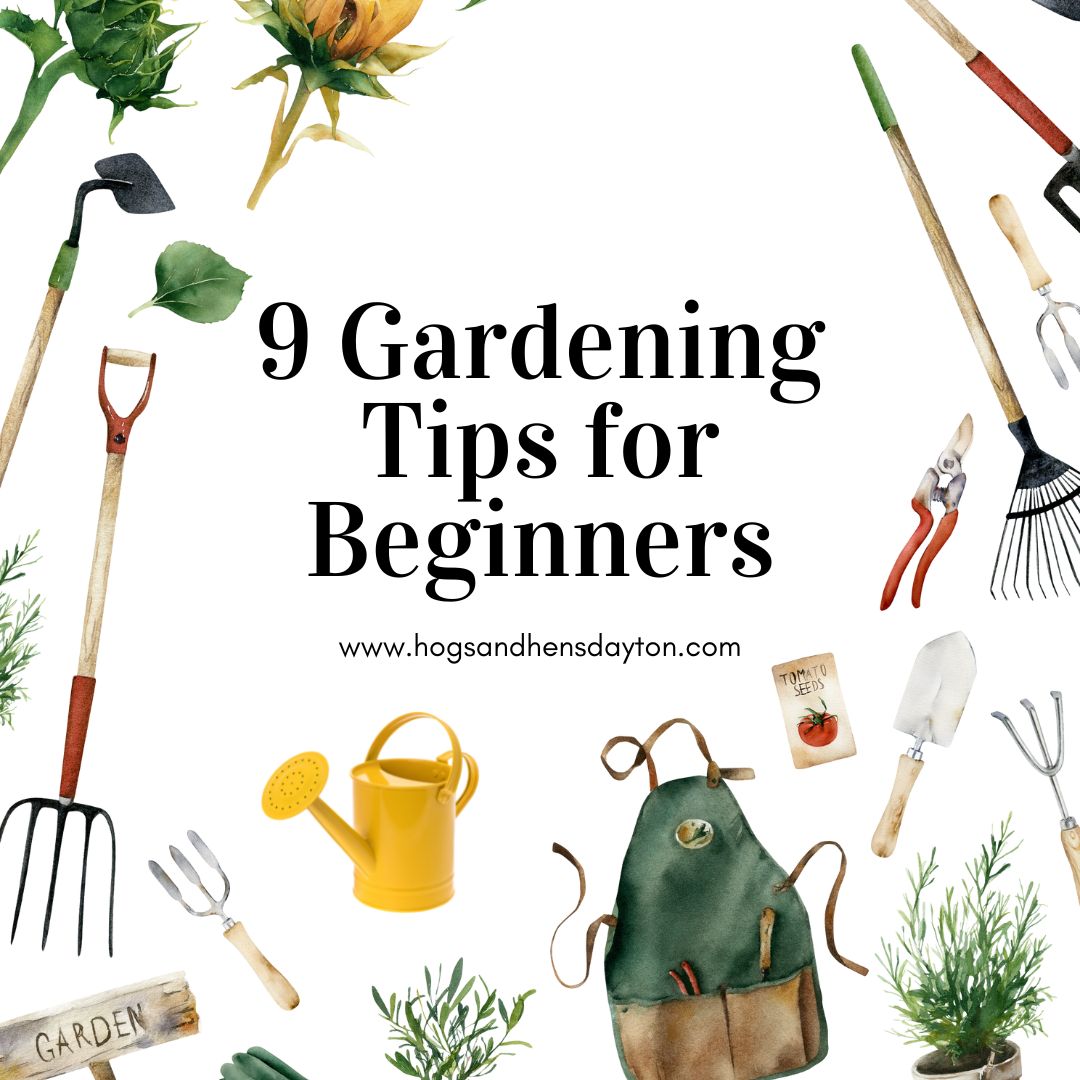
Have you tried planting your own garden in the past but ended up with mixed results? Or maybe you didn’t have any success at all? That can be incredibly frustrating, especially after all the time and energy that you put into it, leaving you thinking that you’ll just never have what it takes to have a green thumb. Don’t give up just yet! So whether it’s your first time gardening or another attempt, these are 9 tips for gardening that every beginner needs to know about.
1.Know Your Frost Dates– When it comes to gardening, it’s crucial for you to know when the average last frost of spring is for your garden and also when the average first frost of fall is for your garden. Planting too early or too late in the season can leave you waking up one morning to a gardener’s absolute worst nightmare, frost ruined crops. Knowing these dates will give you a much better idea of when to plant and the latest that you can safely harvest your crop.
2. Discover Your Zone– While you may be hoping to plant a particular tropical plant in your garden, it may not be able to survive your area’s climate if you live in a colder region. That’s why you need to know the growing zone where you will be gardening. Purchasing the right type of plants for your garden can greatly increase your success rate! For example, tropical plants like citrus will not grow well in cool climates with short growing seasons. A great way to check your zone is the USDA website found HERE.
3.Choose the Right Plants to Grow– Once you’ve figured out what hardiness zone you live in, it will be a lot easier narrow your list to plants that will thrive in your garden. Choosing the right plants will depend on the ability to provide them with the perfect growing conditions in your garden. For example, some plants require lots of sunlight each day, while others need hardly any, so you’ll want to plant them accordingly. Vining plants such as pole beans and cucumber require a trellis to flourish.
4.Follow the Sun– You may already have a rough idea of where you want your garden planted but there’s always the possibility that it may not be the best spot for it. To ensure that you have the best success, your garden needs to be in a location that receives appropriate sunlight each day for the crops you intend to grow. To figure that out, you’ll need to keep an eye on your yard over the next couple of days and see which spots receive the correct sunlight.
5.Keep Close to Water– In addition to sunlight, your garden should also be in a location that’s not too far from a water source. You should be able to run a hose to your garden so that you don’t end up having to make endless trips carrying water across your yard every time your plants are thirsty. When you’re wondering whether it’s time to water them, the best way to tell is to stick your finger in the soil to about your knuckle. If it’s dry, you know that it’s time to water most plants.
6. Make Sure You Have Good Soil– Probably one of the best bits of advice that you need to take from here is to make sure that you have the right soil to work with. Good soil will provide your garden with the proper drainage and all the nutrients necessary for your plants. Check out local universities for testing to learn ways that you can improve your current soil condition to make sure it is the best possible soil for your garden.
7. Consider Using Containers– Don’t have much gardening space in your yard? No problem! Containers are a great option for flowers, herbs, shrubs, and vegetables, while at the same time, protecting them from under- and over-watering. Using containers also gives you the ability to move your plants around your yard when you need to. Be sure that you are using the right size container for whatever plant that you decide to plant in it. Containers with drain holes in the bottom work great for preventing overwatering!
8.Apply a Layer of Mulch– Applying a layer of mulch around your garden will help you in many different ways. Layering 4 to 6 inches of mulch around your plants will help keep weeds to a minimum that try to steal nutrients and water away from your plants. Much will also help minimize the evaporation that’s taking place in your garden, which will keep you from having to water so much. As mulch breaks down, it adds organic material to your soil helping your plants thrive. Mulch can come in many forms, dried leaves that have been shredded, organic straw, and raw untreated wood chips, are a few of our favorite options at Hogs and Hens Urban Farm.
9.Remember to Feed Your Plants Regularly- Now that you’ve made sure to have good soil for your garden, your plants may need to be fed so that they’re getting all the right nutrients for optimal growth. Wondering when to begin feeding them? You’ll want to start feeding your plants regularly about a month after you plant them. A great option to go with would be a homemade fertilizer such as compost tea.
These are several gardening tips that every beginner needs to know about. While there are several other factors to making sure your garden is the best it can be, these 9 tips are sure to get you off to a great start! To learn more about the various garden types listen to Season 1 Episode 23.
When it comes to gardening, having the right tools can make all the difference. But if you’re fairly new to the concept, it can be difficult to know which ones are an absolute necessity. And to make matters worse, things can get even more complicated during a visit to your local lawn and garden store. That’s because you’ll find all kinds of different gardening tools, and there’s also the chance that you don’t even know what half of them are used for. Not to worry! To keep you from going overboard on unnecessary gardening tools purchases or the mistake of not getting everything that you need, it’s essential to know what tools a gardener can’t live without.
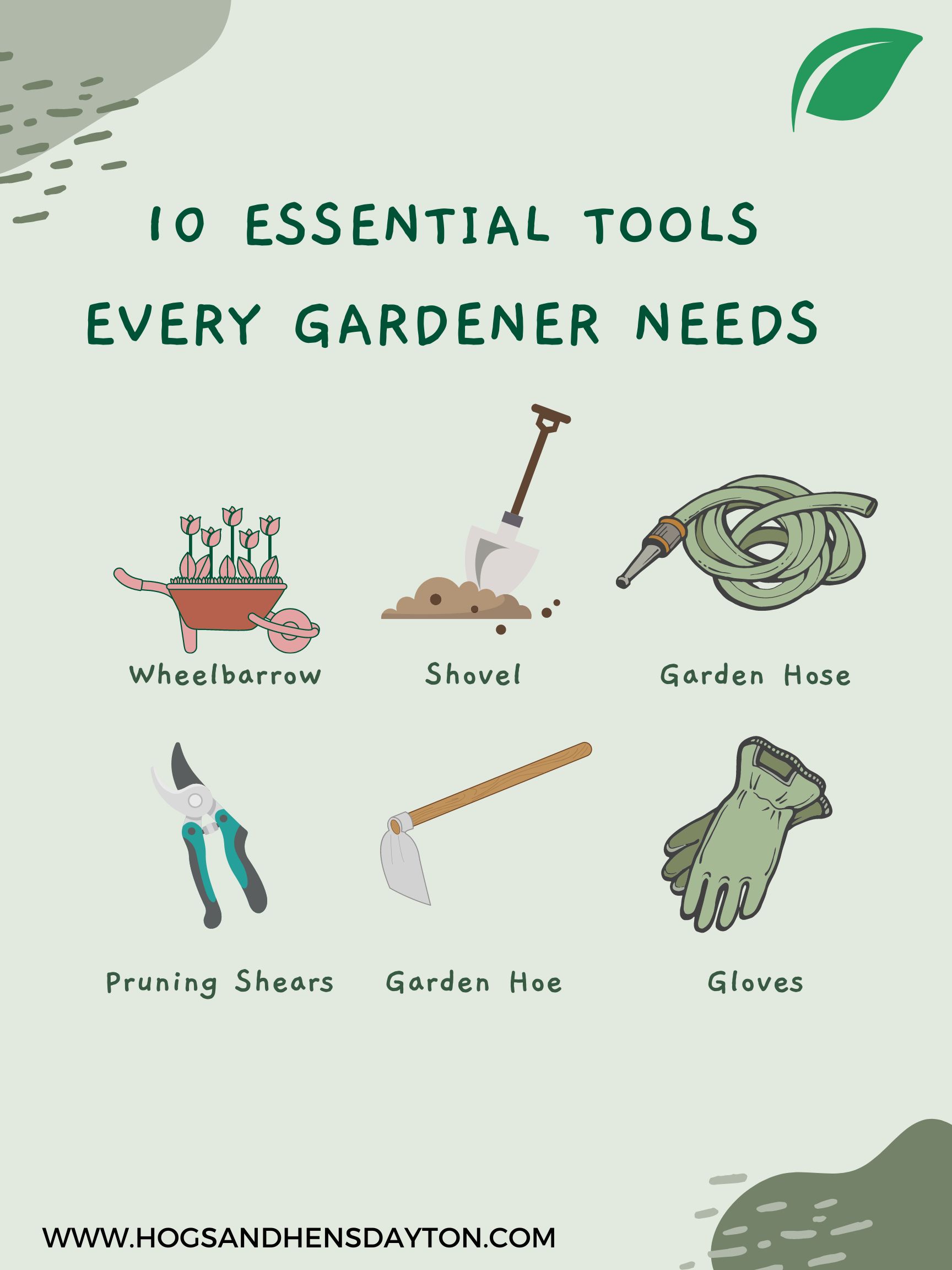
These are 10 essential tools that every gardener needs to have in order to tackle any gardening project.
1. Gloves– Don’t try to be that tough guy or gal that forgoes using gardening gloves because at some point you’re going to regret it. Gloves are designed to protect your hands from blisters, cuts, scratches, and splinters, which can all be very painful. Get yourself a durable pair that can handle tough tasks such as digging, pruning, moving material, and other demanding jobs.
2.Spade or Shovel– You take your pick on whether you’ll go with a spade or a shovel because you’re going to need one or the other. But if it were up to me, I’d personally go with the spade. That’s because it’s able to give you clean and straight edges and it’s also great for cutting up roots, planting, and transplanting.
3.Hand Trowel– At certain points throughout the season, you’ll need a hand trowel for planting and transplanting flowers and plants in your garden beds. They also can be used to help get rid of weeds. A hand trowel that has a broad blade is useful for moving more soil while a trowel with a narrow blade is better to use on rocky soil and digging up weeds. While you’ll pay more for the stainless steelhead, it will last much longer than every other hand trowel out there.
4. Loppers– When you’re needing to cut down large limbs and thicker branches, loppers are a cutting tool that will certainly come in handy for you. You’ll discover that there are anvil and bypass types that range Get yourself loppers with longer handles, which will provide you with more leverage to cut through thicker limbs. But that also means that they’ll be heavier too.
5. Garden Hoe– The garden hoe is an extremely effective and versatile tool that can tackle several of the toughest jobs in your garden, including cutting up roots, digging a trench, moving soil, weeding, and much more. So no matter if you’re digging, planting, chopping, or cultivating your garden, the garden hoe is one of the closest friends to a gardener.
6. Pruning Shears– Pruning shears are another essential gardening tool that you will need to help you prune fruit trees, vegetables, roses, and shrubs. Be sure that you go with a pair of high quality, that way your blade stays sharp longer. Also make sure that you choose shears that fit in your hands comfortably, because pruning can become repetitive and may start to hurt if you have a crummy pair.
7. Hedge Shears– Do you have a lot of landscaping to maintain around your lawn and garden? Or maybe several hard-to-reach areas that need to be touched up from time to time? If so, you’re going to want more than just pruning shears to handle the job. Hedge trimmers and shears will leave your landscaping looking absolutely perfect while also keeping your plants healthy. You can choose between gas, electric, or a pair that requires a bit of labor from you.
8. Watering Hose– Your garden plants require a lot of watering and you certainly can’t rely on the rain all the time. And to be honest, a watering can isn’t the most practical tool to use when you have a large garden, so a watering hose is the best way to go. You’ll also want to consider getting a good hose nozzle or watering wand so that you can customize the amount of water that’s coming out of the hose.
9. Weeder– Ugh, weeds! A gardener’s worst nightmare! And no matter how much you do to prevent them, they’re still sure to sneak up on you at some point. This is why you need to get yourself a good weeding tool to help you combat them. We love using the Cobra Head weeding tool on our farm!
10. Wheelbarrow– A wheelbarrow is a fabulous tool that allows you to accomplish much bigger tasks and in fewer trips. They can be used for moving plants, dirt, mulch, gravel, stones, tools, yard waste, and so much more. But before you transport something heavy, make sure that the weight is distributed evenly, that way you don’t end up tipping your load.
These were 10 essential tools that every gardener needs in order to have great success in their garden. What’s nice about several of them is that they are able to perform more than one task in your garden. Can you think of any other gardening tools that may be necessary? Or if you’re an experienced gardener, what’s the go-to gardening tool that you couldn’t survive without?
You can listen to what Heather says about tools on a budget in Season 1 Episode 10 of the Urban Permaculture Podcast.