logo depicting chicken on motorcycle handlebars in black and white

Hogs and Hens Urban Farm

Category: Original Articles

  • We Have A Bad Bunny

    We Have A Bad Bunny

    Let’s talk about a bad bunny.

    No… not the one who lit up the Super Bowl stage last February.
    I’m talking about the kind of bad bunny that quietly drains your feed bill. It doesn’t give much back to the homestead.

    If you’re building a permaculture-based homestead or even a small backyard production system, this is a conversation we need to have honestly — and with a little humor.

    Because sometimes the sweetest, fluffiest rabbit on the place…
    is actually a bad investment.

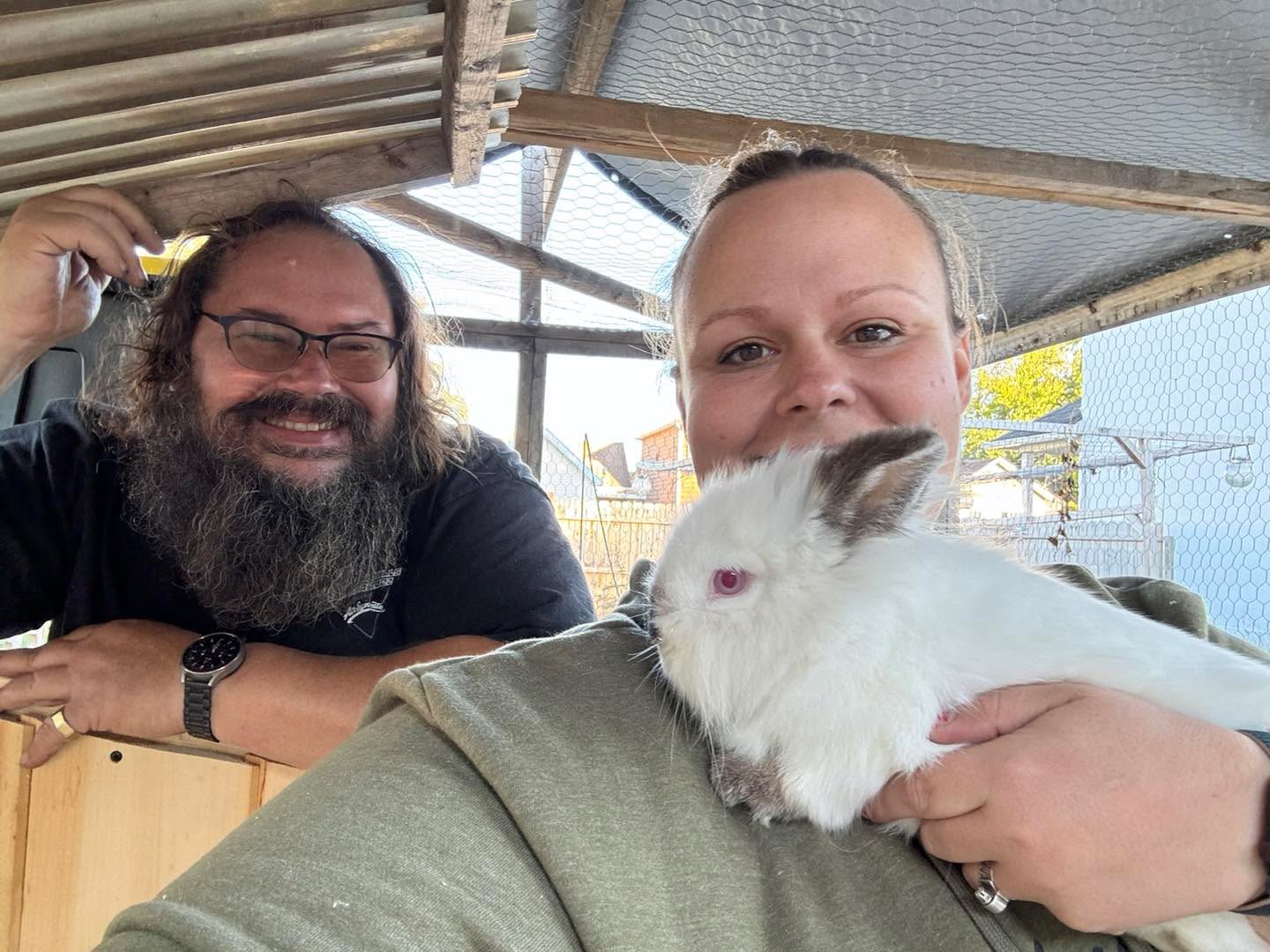
    white rabbit being held by a woman and a bearded man
    Alice isn’t a bad bunny, but she is definitely a pet, not a food source.

    Meet Alice: adorable, sweet… and a bad bunny

    Alice is a Lionhead/Angora mix rabbit.

    She is:

    • ridiculously cute
    • soft as a cloud
    • quiet
    • gentle
    • easy to handle

    In every way, she’s lovely.

    So why on earth would I call her a bad bunny?

    Because not every rabbit is meant to be a meat rabbit. And not every animal belongs in a production system.

    Alice is tiny. Harvesting her for meat would be incredibly inefficient. As a fiber rabbit, she also falls short for our needs. It takes a lot of rabbit fiber to make usable yarn — and even more to offset feed costs. For a working homestead that uses a permaculture approach, she doesn’t produce enough yield. Therefore, breeding her for production is not justified.

    Alice is not livestock here.
    Alice is a pet.

    She’s a rescue bunny, the last one left when another rabbit keeper stepped away from raising rabbits. She landed here because she needed a home — not because we needed production.

    And that distinction matters.

    Breed selection matters in permaculture livestock systems

    In permaculture, we design with needs and yields in mind.

    Every animal on a homestead should ideally:

    • meet a need
    • produce multiple yields
    • fit within the system
    • support soil health
    • justify its inputs

    If the needs of the animal far outweigh the yields it provides, then that animal has shifted from livestock to pet. And there’s nothing wrong with pets — but we must be honest about the role they play.

    This is where many new homesteaders struggle. They fall in love with a cute animal first and ask production questions later.

    When building a regenerative system, it has to be the other way around.

    Why rabbit breed selection is critical

    white rabbit in a hutch
    Alice likes to rub her face in her hay.

    Rabbits can be one of the most efficient livestock choices for small-scale permaculture systems. They:

    • reproduce quickly
    • grow fast
    • require little space
    • produce high-quality manure
    • convert feed into protein efficiently

    But only if you start with the right breeds.

    Choosing the wrong rabbit for meat production is like planting a peach tree when you really needed a shade tree. It might still be lovely — but it doesn’t serve the function you designed for.

    A quick reality check

    If your primary goal is manure only, almost any rabbit will do.

    But if manure is the only meaningful output?
    That animal is functioning as a pet with benefits — not true livestock.

    In a permaculture system, we aim for stacked functions and multiple yields.

    That’s where proper breed selection comes in.

    Best rabbit breeds for meat production

    If you’re raising rabbits for meat within a permaculture homestead, there are three breeds that consistently stand out.

    New Zealand rabbits

    The gold standard of meat rabbits.

    • Rapid growth rate
    • Kits reach 5–6 lbs in 10–12 weeks
    • Excellent mothers
    • Calm temperament
    • Efficient feed conversion

    They come in white, red, and black varieties and are widely used because they simply perform well.

    Californian rabbits

    Often considered the second pillar of meat rabbit production.

    • Muscular, blocky body
    • Fast growth
    • Excellent carcass quality
    • White coat with dark points (ears, nose, feet)
    • Calm and manageable

    Californians are a cross of Himalayan and Chinchilla ancestry and were designed specifically for meat production.

    Silver Fox rabbits (our choice)

    Our homestead chose the Silver Fox — and for good reason.

    Silver Fox rabbits are a large, dual-purpose breed that align beautifully with permaculture principles.

    They provide:

    • substantial meat production
    • beautiful, usable hides
    • gentle temperament
    • strong mothering instincts
    • efficient feed conversion

    But what really sold me?

    Stacked yields.

    Why we chose Silver Fox rabbits for our permaculture system

    Permaculture teaches us to design systems where every element serves multiple functions.

    With our Silver Fox rabbit colony, we receive:

    • Meat for our family
    • Nutrient-dense manure for the garden (cold manure — can go straight on beds)
    • Hides for tanning and warm clothing
    • Bones for broth
    • Scraps for dog food
    • Bone meal for soil health

    Nothing wasted.

    One of the core permaculture principles is:
    Produce no waste.

    A well-managed rabbit colony is one of the clearest examples of this principle in action.

    Compare that to a small, low-yield rabbit that consumes feed but produces very little meat or fiber. Suddenly you can see why Alice — sweet as she is — simply doesn’t belong in the production plan.

    The difference between pet rabbits and production rabbits

    This is where many homesteaders feel guilty, so let’s say it plainly:

    Not every animal needs to be productive.
    But every production system needs clarity.

    Alice is loved. She is safe. She is cared for.
    She is not bred. She is not part of the meat program.

    She is a pet — and that’s perfectly fine.

    But when building a permaculture homestead, livestock must be chosen intentionally. Otherwise feed bills rise, space gets tight, and systems become inefficient quickly.

    A “bad bunny” isn’t a bad animal.
    It’s simply an animal that doesn’t match the system’s purpose.

    Rabbit colony biosecurity: protecting your investment

    Once you’ve chosen the right meat rabbit breeds — whether New Zealand, Californian, or Silver Fox — protecting that colony becomes critical.

    Rabbit biosecurity is often overlooked, but disease can wipe out a colony quickly if precautions aren’t taken.

    Core rabbit biosecurity practices

    1. Closed colony whenever possible
    Avoid constantly bringing in new rabbits. Each new animal introduces disease risk.

    2. Quarantine new rabbits
    Any new rabbit should be quarantined for at least 30 days before joining your colony.

    3. Clean, dry housing
    Rabbits are extremely sensitive to ammonia and dampness.
    Good ventilation is non-negotiable.

    4. Separate shoes and tools
    Use dedicated footwear or boot dips for rabbit areas, especially if visiting other farms.

    5. Rodent control
    Wild rodents spread disease and contaminate feed.

    6. Clean feeders and waterers regularly
    Biofilm buildup spreads illness quickly in colonies.

    7. Observe daily
    Loss of appetite, lethargy, nasal discharge, or diarrhea should be addressed immediately.

    8. Limit unnecessary visitors
    Well-meaning friends who also keep rabbits can unintentionally carry pathogens.

    In a permaculture system, biosecurity protects not just the rabbits — but your food supply, soil fertility, and overall homestead stability.

    The permaculture lens: needs vs yields

    Every time we add an animal to the homestead, we should ask:

    • What does this animal need?
    • What does it produce?
    • Do the yields justify the inputs?
    • Does it serve multiple functions?
    • Does it support soil health?

    Silver Fox rabbits check every box for us.

    Alice does not.

    And that’s okay.

    Because permaculture isn’t about eliminating joy — it’s about designing systems that sustain life without burning us out.

    Alice reminds us that not every creature has to be productive to be valuable.
    But when it comes to building resilient food systems, breed selection matters.

    So yes…
    while Alice is sweet, soft, and deeply loved…

    In terms of production and scale?
    She’s absolutely a bad bunny.
  • Embracing Slow Changes for Lasting Growth

    Embracing Slow Changes for Lasting Growth

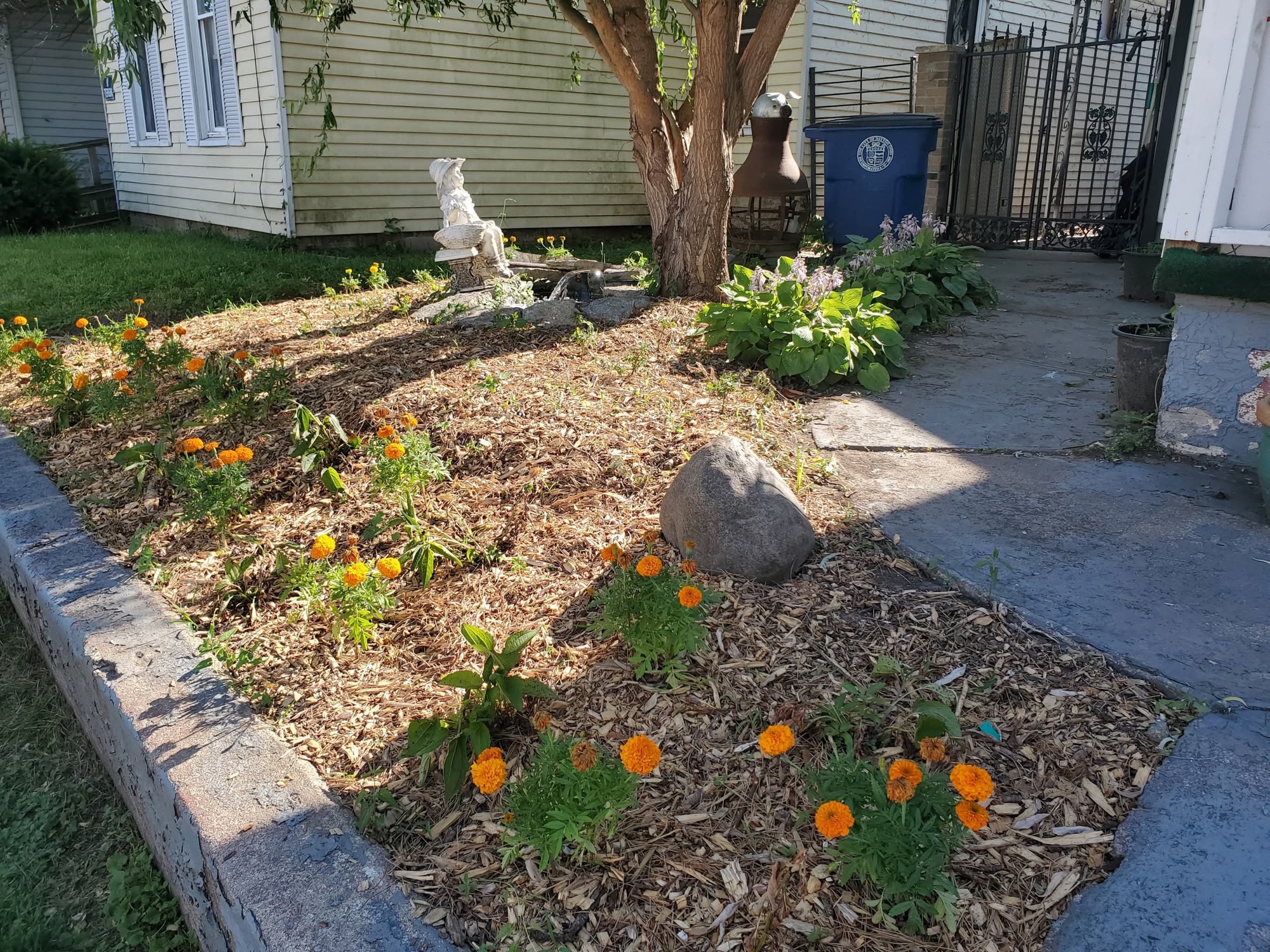
    image of a curly willow and a sidewalk garden shows mostly hostas and marigolds sparsely planted
    We worked hard to build this area into a willow guild but didn’t realize it was destroying our sewer lines. The lines were not observed when it was planted before we bought the house.

    There’s this moment most of us have had.

    You get inspired.
    You see the vision.
    You’re ready to change everything—your garden, your soil, your habits, your food, your life.

    And then… a few weeks later, you’re overwhelmed, behind, and wondering why something that felt so exciting suddenly feels so heavy.

    I’ve been there too.

    And what I’ve learned—both in the garden and in life—is this:

    Fast change burns you out.
    Slow change builds something that lasts.


    Nature Doesn’t Rush—And That’s Not an Accident

    If you’ve ever watched a piece of compacted clay soil slowly turn into rich, living earth, you already understand this.

    It doesn’t happen overnight.

    You don’t throw compost on it once and suddenly have perfect soil. Though it would be really nice to dream about.
    You layer. You observe. You adjust. You wait.
    Then you do it again with consistency.

    That’s how ecosystems are built.

    And here’s the truth most people skip over:

    Permaculture isn’t about doing more. It’s about doing the right next thing, consistently.

    In fact, using slow gradual changes is actually one of the principles of permaculture!

    Not everything at once.
    Not perfectly.
    Just… intentionally.


    Why Slow Changes Actually Work (When Fast Ones Don’t)

    Let’s be real—fast change feels productive.

    But slow change is what actually sticks.

    Here’s why:

    1. Your System Has Time to Respond

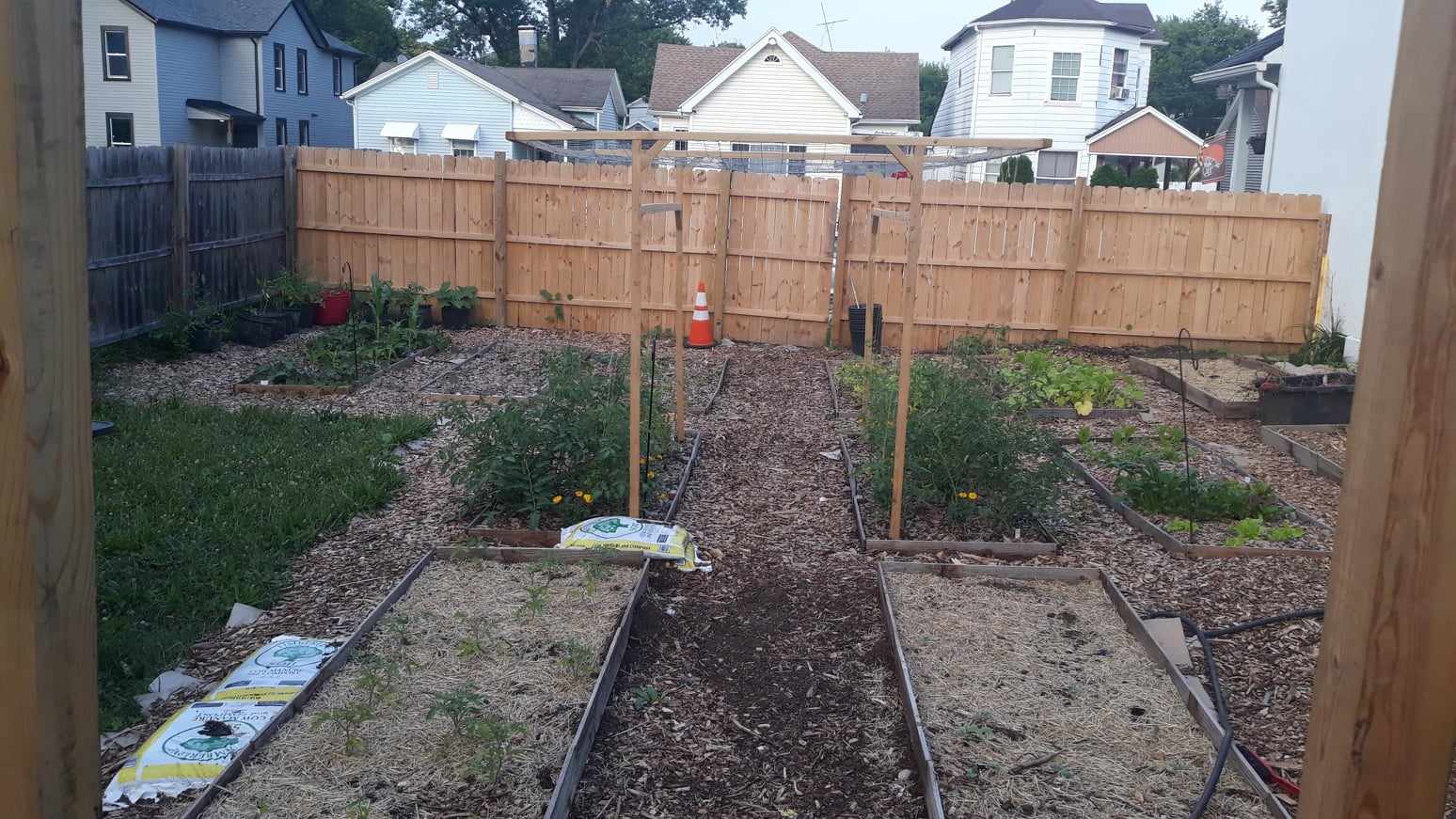
    First in ground garden at Hogs and Hens Urban Farm transitioning from yard to garden
    Our first year planting in ground was a year for learning. We didn’t add enough soil, compost or mulch. We didn’t use enough cardboard, but we observed each challenge and slowly made changes to create a better garden!

    Whether it’s your soil, your garden layout, or your daily routine—everything is a system.

    When you make one small change, you can actually see what it does.

    • Add compost → watch moisture retention improve
    • Introduce mulch → observe weed pressure drop
    • Shift planting timing → notice growth differences

    If you change ten things at once, you don’t know what worked.

    And if you don’t know what worked, you can’t repeat success.

    Updated image of our 2026 Garden. Hearty perennial onions grow in rich rows that are heavily mulched
    5 years later, the soil is rich, deeply composted, and fertile

    2. You Reduce Overwhelm (and Actually Follow Through)

    Let’s talk honestly for a second…

    Most people don’t fail because they’re lazy.
    They fail because they tried to do too much, too fast.

    Slow change gives your brain space to keep up.

    Instead of:

    • “I need to build raised beds, start compost, plant everything, fix my soil, and install irrigation…”

    You shift to:

    • “Today, I’m starting a compost pile.”

    That’s doable.
    That’s sustainable.
    That builds momentum.


    3. You Build Resilience Instead of Dependency

    Quick fixes often rely on outside inputs. We live our life trying to consume less and keep our systems as closed loop as possible.

    Slow systems build strength from within. Having a closed loop system means less trips to town, less fuel used, less waste generated (packaging) and lets be honest, it feels really good to know where your food comes from!

    • Compost instead of synthetic fertilizer
    • Mulch instead of constant watering (chipdrop.com is a way to get free mulch!)
    • Diversity instead of monoculture because diversity creates strength

    You’re not just fixing a problem—you’re building a system that prevents the problem next time.


    The Real Magic: Learning How to Pivot

    Here’s where slow change becomes powerful.

    Because when you move slowly…

    You can adjust.

    And that’s everything.

    Gardening (and honestly, life) isn’t about getting it perfect the first time.
    It’s about reading what’s happening and responding. I once planted the most beautiful crop of watermelons too close to a fence. I had not accounted for the shade the fence would be casting on the melons, and because of that, they didn’t get the sunlight they needed to thrive. If I had taken the time to actually map the sun across my yard, I would have seen the issue, but I was so excited to have such strong seedlings, I absolutely skipped the observation phase initially.


    Practical Ways to Pivot as You Go

    Let’s make this real and usable.

    🌿 Observe First, React Second

    Before you “fix” anything, ask:

    • What is the soil telling me? Are the weeds telling you what your soil needs?
    • Where does water naturally sit or run? Seriously look outside when it is raining. Watch where the water moves, and figure out where it absorbs, where it pools, and where it simply runs away.
    • Which plants are thriving without help? These are rockstars and will help you plan good companions for these anchor plants.

    Observation saves you time, money, and energy. In the case of my first attempt at Sugar Baby watermelons, it would have saved me some heartbreak at the realization they wouldn’t be able to get enough sun to fully ripen,


    🌱 Make One Change at a Time

    This is your golden rule.

    Instead of overhauling everything:

    • Add compost to one bed
    • Trial a new mulch in one area
    • Test a companion plant pairing in a small section

    Then watch.

    Let the garden give you feedback. You don’t want to spread an entire load of aged manure on your whole garden, only to realize it has residual herbicides that remained. I’ve seen it happen, and it is heartbreaking.

    Nature doesn’t create an ecosystem overnight.


    🌼 Use “Test Zones” in Your Garden

    You don’t need perfection—you need information.

    Create little experiment areas:

    • One section with heavy mulch
    • One with light mulch
    • One with different mulch

    See what performs best in your space.

    That’s better than any generic advice online. I see many gardeners using straw in their garden, but we have had nothing but bad luck when we have used it. I’m not saying straw is bad as a mulch source, I’m saying that it is not a good choice for THIS homestead. I learned that by observation.


    🍂 Adjust Based on Results, Not Expectations

    This one can be humbling.

    Sometimes what should work… doesn’t.

    And that’s okay.

    If something isn’t thriving:

    • Move it
    • Amend differently – It has taken me 2 years to get my peach trees looking healthy after a peach leaf curl fungus infected our trees.
    • Replace it with something better suited

    Pivoting isn’t failure.
    It’s how you refine your system.


    🌻 Stack Small Wins

    Instead of chasing big transformations, look for small improvements:

    • Soil holds moisture better than last month
    • Fewer weeds than last season
    • One crop that did really well

    These are signals you’re on the right path.

    And over time?

    Those small wins compound into something incredible.


    What This Looks Like in Real Life

    On our farm, we didn’t transform our soil overnight.

    We started with heavy clay. Compacted. Lifeless.

    We didn’t fix it in a season.

    We:

    • Added compost (even when it wasn’t perfect)
    • Mulched with what we could get for free
    • Used what we had—cardboard, leaves, wood chips, shredded paper
    • Let time and biology do their work

    And slowly…

    That soil came alive. I look back at the days of digging out bricks, and rocks as we started the garden, and it is honestly hard to believe this soil was once so beige and…dead. I grab a handful of soil now and it is rich and nearly black.

    Not because we rushed it. Especially after our car accident, nothing is rushed. If anything, we slowed down even more and the changes became more gradual out of physical necessity.


    But because we stayed consistent. Because we consistently fed our soil exactly what it told us it needed.


    Slow Change Builds Confidence

    There’s something else that happens when you work this way.

    You start trusting yourself.

    Because you’re not guessing anymore—you’re learning.

    You see:

    • What works in your space
    • What doesn’t
    • What needs adjusting

    And that confidence?

    That’s what turns a beginner into someone who knows what they’re doing. I used to say I had a black thumb. My mother and grandparents were blessed with green thumbs. I realized later, I just wasn’t giving the plants what they needed. When I finally started to actually observe them, I realized the sky was the limit to what I can grow.


    Final Thoughts: Give It Time (and Give Yourself Grace)

    If you take nothing else from this, take this:

    You don’t need to do everything today.

    You just need to take the next step.

    Slow change isn’t about doing less—it’s about doing things in a way that actually lasts.

    So start where you are:

    • Add the compost
    • Plant the seed
    • Observe what happens

    And when something doesn’t go as planned?

    Good.

    That’s your opportunity to pivot, adjust, and build something even better.


    Regenerating earth, one backyard at a time… doesn’t happen overnight.
    But it does happen—beautifully—when you let it unfold the way nature intended.

    If you are wanting even more advice on building an abundant garden, check out my new book Growceries available HERE on amazon!

  • The Journey of Hogs and Hens Urban Farm

    The Journey of Hogs and Hens Urban Farm

    logo depicting chicken on motorcycle handlebars in black and white
    Hogs and Hens Urban Farm Logo

    Once upon a time, my mentor crushed my heart. He didn’t mean to hurt my feelings. He didn’t do it maliciously, he simply told me that Hogs and Hens Urban Farm isn’t a farm at all. It is a homestead.

    When choosing our name, we thought long and hard about what we wanted to choose. Each portion of our name is very carefully curated. Words that have been woven as a tapestry to proudly display our story.

    We don’t raise hogs here on the farm. For now, city ordinances prohibit that endeavor. Honestly, I don’t have the space required to raise them the way I would like. So why is Hogs the first part of our name? Well, the hogs in our name are a reference to our motorcycles. Before a car accident in early 2024, Bob and I rode frequently. Motorcycles are a significant part of who Bob is as a person.

    The and is important because it signifies that the two parts are one. This farm is a joint operation. The business is all Heather, the day to day homesteading tasks are split between Bob, myself, and our roommate Tammy.  We post our adventures online. I tour the country. I teach others how to save the earth, one backyard at a time. But before all of that, this was just our home. It is the place we are building to be the perfect home for him and me.

    The Hens portion of our name is fairly self-apparent, we do in fact raise hens.  More importantly, the motorcycles (Hogs) represent the leather, the toughness, and the love of the open road. The hens represent the softness of a feather. It also embodies the warmth of the nest. The hen also signifies the love of a healthier life at home.

    Urban, well it doesn’t get much more urban than our neighborhood. We live about a 5 minute walk to downtown Dayton. Most of my neighbors have very small backyard lots and shallow front lawns. Most of the streets in my neighborhood are lined with litter, and graffiti is an ever growing issue. The drug epidemic has absolutely ravaged this area. Our neighborhood is a high crime area. There is a robbery or break-in almost every week in my neighborhood. That doesn’t stop me from living my homestead dreams.

    Farm, the word that is the most controversial portion of our name. To be fair to my mentor, we aren’t a farm. When he asked me what we produce for a profit, I said “knowledge.” He explained that what I actually have is a homestead. He’s right. But the Farm portion of our name has stuck. This is because when driving through my neighborhood, you suddenly see a fella unloading compost from his big antique tractor, you instantly feel like you’re on a farm. Most folks call our house “the farm.” Honestly, when you’re in our backyard, most of the time, you’d think you’re out somewhere rural. The chickens sing their egg songs. The quail gently coo as we refill their waterers. The wind gently rustles through the plants we have lovingly placed all over this property. It is easy to forget that you’re in the middle of a big city.

    So while my heart was broken and I initially felt pretty dumb when he called me out for not being a farm, we are both right in the end. We aren’t a farm by the standard textbook definition. But we are a farm at heart. The commodity I produce is in-fact, knowledge.

    That’s how we became known as Hogs and Hens Urban Farm. It started as a little raised bed to grow a few tomatoes that tasted like real food. It evolved into a growing food forest and an annual garden. We also have an ever-growing army of animals that all serve a purpose on our homestead. I really love our homestead, even if it isn’t a farm.

    When you see our logo, you’re looking at a hen on the handlebars of a motorcycle. She is the hen on her hog. So just kick back and enjoy the ride!

  • Practical Tips for Self-Regulation in Your Garden

    Practical Tips for Self-Regulation in Your Garden

    Hey folks —
    I’m 39, I live in the city, and I once planted an entire raised bed with mint. Yeah… I know.

    Fast-forward two summers, and I was in a full-on mint mutiny, yanking fistfuls of fragrant invaders while wondering if I could sneak them into yet another pot of tea before my friends and family staged an intervention.

    Lesson learned: Nature gives feedback. Loudly, if you ignore her the first time.

    Today I want to talk about the 4th permaculture principle: “Apply Self-Regulation and Accept Feedback.” It sounds serious—and honestly, it is—but it’s also deeply practical, surprisingly personal, and totally liberating once you get the hang of it.


    🌱 What This Principle Actually Means

    At its core, this principle is a two-part invitation:

    1. Check your own behavior — especially the stuff that might be unsustainable, extractive, or just plain over-the-top.
    2. Listen when the system (or your neighbor, or your back muscles) tells you something’s not working.

    Permaculture isn’t just about designing gardens or food forests—it’s about designing lives that work. And just like ecosystems, our lives need built-in ways to adjust course when things start getting out of whack.


    🐜 Nature Already Gets This

    Ecosystems are masters of feedback and regulation. Think about it:

    • Too many aphids? Here come the ladybugs.
    • Too much nitrogen? Certain plants will slow their uptake.
    • A tree gets too tall for its root system? It sheds limbs or stops growing.

    There’s no “perfection,” just constant responsiveness.

    Now imagine applying that mindset to your urban garden—or your daily routine.


    🛠️ My Minty Mistake (And Other Human Habits)

    Back to that mint bed. The mint was thriving—too much. The feedback was clear: the soil was too rich, the boundaries too loose, and I wasn’t paying attention. But instead of adjusting early, I let it ride until I was knee-deep in spearmint regret.

    That’s self-regulation in action—or, in my case, in inaction. The land was telling me something. I just wasn’t listening.

    We do the same thing with:

    • Overwatering stressed plants
    • Ignoring burnout signs in ourselves
    • Buying “just one more” garden gadget we don’t actually need

    The key is to build systems (and habits) that notice early and course-correct gently.


    🧭 So… How Do You Actually Do That?

    Here are a few ways I apply this principle as an urban permaculture designer:

    1. The Weekly Walkabout

    Every Sunday, I do a slow walk through my garden. Not to weed, not to fix—just to observe. What’s thriving? What’s not? Any patterns showing up?

    2. The Feedback Journal

    Once a week, I jot down what’s working and what’s not—in the garden and in my life. (Spoiler: sometimes it’s “stop agreeing to three Zoom meetings after 7 p.m.”)

    3. Use Tools That Talk Back

    Install a rain gauge. Use a compost thermometer. Track your energy bills. These little data points whisper truths if you’re willing to listen.

    4. Invite Other Eyes

    Ask a friend or fellow grower to tour your space and tell you what they notice. It’s humbling—and wildly helpful.


    🧠 A Thought Experiment (a.k.a. Homework, But Cool)

    Ask yourself:

    “What’s one thing in my space—or my habits—that keeps giving me the same feedback over and over?”

    Maybe it’s that soggy corner of your yard. Or your overflowing email inbox. Or the cucumbers that never do well in that one shadier spot. (Hint: They’re voting with their leaves.)

    Now: what’s one small self-regulation you can make this week?


    🌻 Final Thoughts From a Former Mint Wrangler

    The beauty of this principle is that it’s not about getting it perfect. It’s about getting better at noticing, and responding with care.

    Self-regulation and feedback aren’t punishments—they’re invitations to co-evolve. To be in real-time dialogue with our landscapes, our communities, and our own inner rhythms.

    And maybe—just maybe—to leave a little less mint and a little more wisdom behind.


    Thanks for reading, permapeeps. If this post sparked something for you, go check out the podcast episode where I unpack all of this (and more) with stories, tips, and a few awkward admissions.

    Stay curious. Stay humble. Stay regenerative.
    — Heather,

    Your urban permaculture pal, aged 39 and still learning as I grow

  • The Power of Diversity in Permaculture: Creating Nature’s All-Star Growth Team

    The Power of Diversity in Permaculture: Creating Nature’s All-Star Growth Team

    Imagine building a soccer team where every player is a goalie. Sure, no one would score against you, but no one would score for you either. In permaculture, much like soccer, every team member has an important role to play. For nature, diversity isn’t just helpful — it’s crucial. This concept of species diversity is one of the core pillars that make permaculture ecosystems not just survive but thrive.

    2022 View of our annual garden with the beginnings of species diversity.
    This was the beginning of our annual garden in 2022. Notice the marigolds with tomatoes? We have added so much diversity since then!

    Why Species Diversity Matters

    Permaculture systems mimic natural ecosystems, and in natural ecosystems, no one plant (or animal) does all the heavy lifting. Different species play unique roles that together create a balanced, resilient environment. Diversity is what keeps things humming along efficiently, no matter what curveballs nature throws.

    Here are some key benefits species diversity brings to permaculture:

    1. Pest Control: Diverse plants attract diverse insects, and that’s a good thing. Predatory insects keep pest populations in check. For instance, ladybugs feast on aphids, and parasitic wasps target caterpillars. Monocultures (single-crop systems) act like an all-you-can-eat buffet for pests. But in diverse systems, pests have a harder time gaining the upper hand. The more variety in any growing area, the less pest pressure you will find! I go into further explanation in Season 1 Episode 8.
    2. Improved Soil Health: Different plants interact with soil in unique ways. Legumes like clover, beans, and peas fix nitrogen, while deep-rooted plants like comfrey and dandelion mine nutrients from deep in the soil. Together, they cycle nutrients efficiently, improving fertility and structure. Planting diversity has tremendously helped us improve our soil while the food forest is growing and maturing. Learn more about soil types in Season 1 Episode 29 of our podcast.
    3. Resilience to Disease: Plant diseases often spread rapidly in monocultures because pathogens encounter the same susceptible host over and over. Diverse plantings break this cycle, limiting the spread of disease and minimizing crop loss. This is how we are able to avoid many of the common diseases that other gardeners face.
    4. Microclimate Management: Tall trees provide shade for delicate undergrowth; shrubs protect wind-sensitive plants; ground covers stabilize the soil. A mix of plant heights, leaf structures, and root depths creates a dynamic environment that buffers extreme conditions. By planting things very meticulously in the beginning, I am able to avoid having additional work later down the road. A perfect example of this is that you will never find us covering plants with shade cloth. Anything that requires partial shade simply gets planted below something that will provide natural shade.
    5. Pollination Power: Flowering plants that bloom throughout the year keep pollinators like bees and butterflies fed and active. This benefits the entire ecosystem and improves fruit and seed production. Plus, lets be honest… seeing loads of beautiful butterflies, hummingbirds, and other beautiful creatures just makes the growing experience even better!

    Designing for Diversity

    Permaculture design encourages diversity through thoughtful plant selection, guild planting, and strategic layering. Here’s how these principles come to life:

    1. Guild Planting: Think of a guild as a well-orchestrated band. Each plant has a role: some fix nitrogen, some repel pests, and some provide shade or mulch. A classic example is the “Three Sisters” system: corn provides structure for climbing beans, beans fix nitrogen in the soil, and squash sprawls along the ground to suppress weeds and maintain soil moisture.
    2. Polycultures: Instead of planting neat rows of the same crop, permaculture gardens combine multiple species. For instance, planting basil among tomatoes repels pests, while marigolds deter nematodes. The result? Healthier plants and tastier tomatoes! Check out this fantastic resource for planning your companion planting this year!
    3. Succession Planting: In diverse systems, plants mature at different rates. Fast-growing radishes can be sown among slower crops like carrots or onions. The radishes are harvested early, leaving space for the slower plants to expand. This allows you to grow more food in the same space while the soil is never left bare. It is important to mention that when succession planting, make sure to top dress your space with some good quality compost after you harvest. This allows the soil to be “recharged” and ready for the next round of crops to be sown.

    Real-Life Example: Regenerating Clay Soil with Diversity

    Clay soil can be a challenge — it’s dense, compacts easily, and often struggles with drainage. Here in our Ohio garden, our native soil is almost entirely hard clay soil with little nutrition. But with strategic planting, it’s possible to unlock its potential. In fact, our property is a prime example of these practices working!

    • Deep-rooted plants like daikon radish or chicory break up compacted soil, improving aeration.
    • Nitrogen-fixing species like vetch or clover boost fertility.
    • Mulch providers such as comfrey improve soil structure when cut and laid as mulch.

    By combining these species, you create a diverse root system that opens up pathways for air and water while feeding beneficial fungi and microbes. Over time, this unlocks the clay’s hidden richness and transforms it into healthy, fertile soil.

    Remediating Glyphosate-Contaminated Soil with Diversity

    Glyphosate, a common herbicide, can hinder soil health by reducing microbial diversity and binding essential nutrients. The solution? Bring in plants that naturally assist in bioremediation.

    • Sunflowers are champions at absorbing toxins from the soil.
    • Mustard plants help break down harmful compounds while enriching the soil with organic matter.
    • Mycorrhizal fungi form symbiotic relationships with plants, improving nutrient absorption and accelerating soil recovery.

    Planting these species together creates a natural cleanup crew that steadily repairs damaged soil. It is important to mention that plants used as a trap crop for residual pesticides and herbicides should NOT be composted. These materials can then be leached into your garden which would negate the effects of your hard work!

    Embracing Nature’s Variety

    In permaculture, diversity is more than just a buzzword — it’s the secret ingredient that makes gardens, food forests, and landscapes more productive and resilient. Diversity is something that we work very hard every day to maintain at our farm. By embracing nature’s blueprint for variety, you create an environment that nurtures itself, resists pests and disease, and thrives in the face of change.

    So, the next time you’re planting your garden, remember: Mother Nature doesn’t rely on a one-player team. She fields an entire roster of specialists, and they all deserve a spot on your soil’s starting lineup.

    Wanting to get started on your own garden? Check out this article for 9 Gardening Tips for Beginners!