logo depicting chicken on motorcycle handlebars in black and white

Hogs and Hens Urban Farm

Tag: hogs and hens urban farm

  • Embracing Slow Changes for Lasting Growth

    Embracing Slow Changes for Lasting Growth

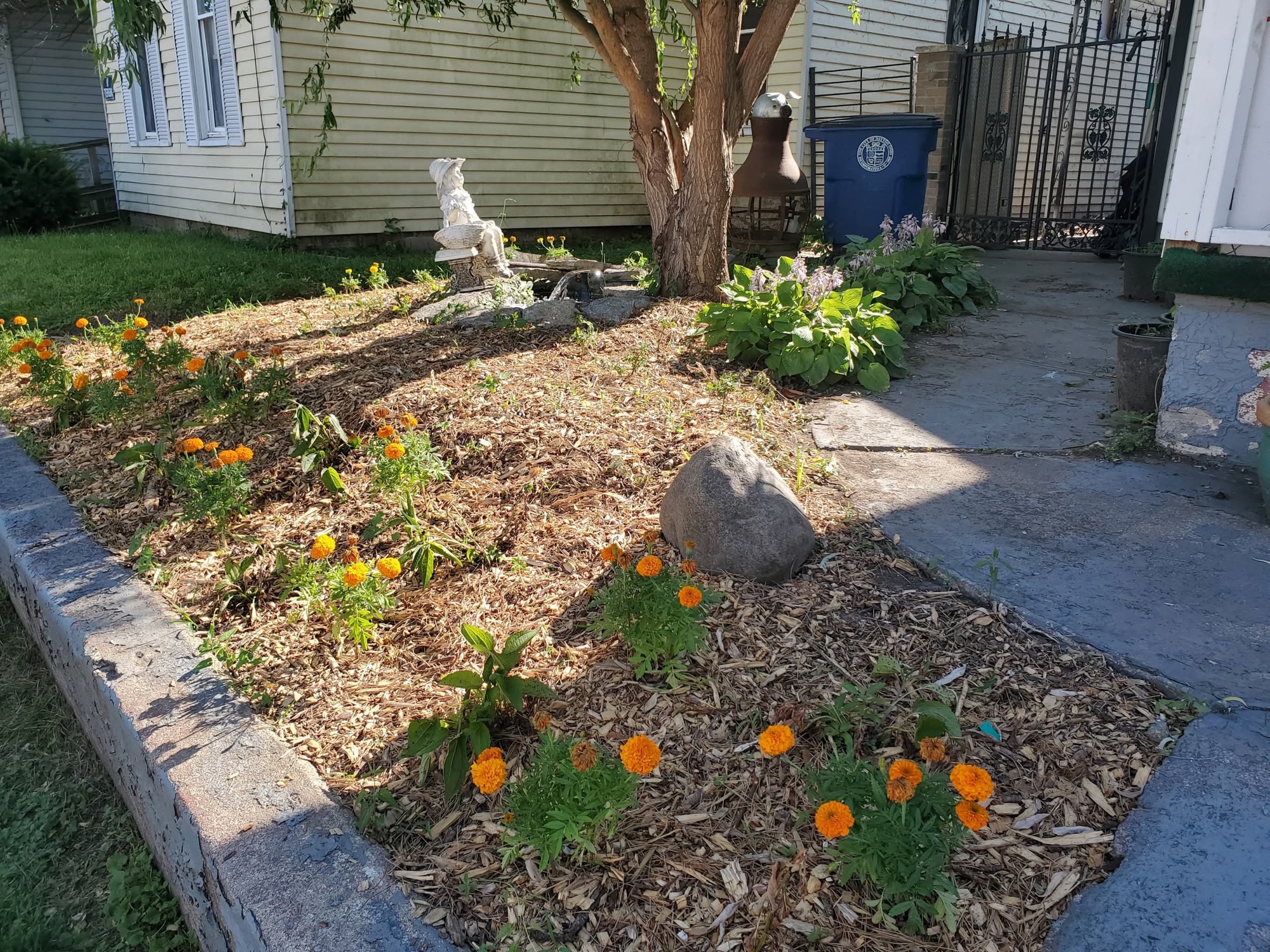
    image of a curly willow and a sidewalk garden shows mostly hostas and marigolds sparsely planted
    We worked hard to build this area into a willow guild but didn’t realize it was destroying our sewer lines. The lines were not observed when it was planted before we bought the house.

    There’s this moment most of us have had.

    You get inspired.
    You see the vision.
    You’re ready to change everything—your garden, your soil, your habits, your food, your life.

    And then… a few weeks later, you’re overwhelmed, behind, and wondering why something that felt so exciting suddenly feels so heavy.

    I’ve been there too.

    And what I’ve learned—both in the garden and in life—is this:

    Fast change burns you out.
    Slow change builds something that lasts.


    Nature Doesn’t Rush—And That’s Not an Accident

    If you’ve ever watched a piece of compacted clay soil slowly turn into rich, living earth, you already understand this.

    It doesn’t happen overnight.

    You don’t throw compost on it once and suddenly have perfect soil. Though it would be really nice to dream about.
    You layer. You observe. You adjust. You wait.
    Then you do it again with consistency.

    That’s how ecosystems are built.

    And here’s the truth most people skip over:

    Permaculture isn’t about doing more. It’s about doing the right next thing, consistently.

    In fact, using slow gradual changes is actually one of the principles of permaculture!

    Not everything at once.
    Not perfectly.
    Just… intentionally.


    Why Slow Changes Actually Work (When Fast Ones Don’t)

    Let’s be real—fast change feels productive.

    But slow change is what actually sticks.

    Here’s why:

    1. Your System Has Time to Respond

    First in ground garden at Hogs and Hens Urban Farm transitioning from yard to garden
    Our first year planting in ground was a year for learning. We didn’t add enough soil, compost or mulch. We didn’t use enough cardboard, but we observed each challenge and slowly made changes to create a better garden!

    Whether it’s your soil, your garden layout, or your daily routine—everything is a system.

    When you make one small change, you can actually see what it does.

    • Add compost → watch moisture retention improve
    • Introduce mulch → observe weed pressure drop
    • Shift planting timing → notice growth differences

    If you change ten things at once, you don’t know what worked.

    And if you don’t know what worked, you can’t repeat success.

    Updated image of our 2026 Garden. Hearty perennial onions grow in rich rows that are heavily mulched
    5 years later, the soil is rich, deeply composted, and fertile

    2. You Reduce Overwhelm (and Actually Follow Through)

    Let’s talk honestly for a second…

    Most people don’t fail because they’re lazy.
    They fail because they tried to do too much, too fast.

    Slow change gives your brain space to keep up.

    Instead of:

    • “I need to build raised beds, start compost, plant everything, fix my soil, and install irrigation…”

    You shift to:

    • “Today, I’m starting a compost pile.”

    That’s doable.
    That’s sustainable.
    That builds momentum.


    3. You Build Resilience Instead of Dependency

    Quick fixes often rely on outside inputs. We live our life trying to consume less and keep our systems as closed loop as possible.

    Slow systems build strength from within. Having a closed loop system means less trips to town, less fuel used, less waste generated (packaging) and lets be honest, it feels really good to know where your food comes from!

    • Compost instead of synthetic fertilizer
    • Mulch instead of constant watering (chipdrop.com is a way to get free mulch!)
    • Diversity instead of monoculture because diversity creates strength

    You’re not just fixing a problem—you’re building a system that prevents the problem next time.


    The Real Magic: Learning How to Pivot

    Here’s where slow change becomes powerful.

    Because when you move slowly…

    You can adjust.

    And that’s everything.

    Gardening (and honestly, life) isn’t about getting it perfect the first time.
    It’s about reading what’s happening and responding. I once planted the most beautiful crop of watermelons too close to a fence. I had not accounted for the shade the fence would be casting on the melons, and because of that, they didn’t get the sunlight they needed to thrive. If I had taken the time to actually map the sun across my yard, I would have seen the issue, but I was so excited to have such strong seedlings, I absolutely skipped the observation phase initially.


    Practical Ways to Pivot as You Go

    Let’s make this real and usable.

    🌿 Observe First, React Second

    Before you “fix” anything, ask:

    • What is the soil telling me? Are the weeds telling you what your soil needs?
    • Where does water naturally sit or run? Seriously look outside when it is raining. Watch where the water moves, and figure out where it absorbs, where it pools, and where it simply runs away.
    • Which plants are thriving without help? These are rockstars and will help you plan good companions for these anchor plants.

    Observation saves you time, money, and energy. In the case of my first attempt at Sugar Baby watermelons, it would have saved me some heartbreak at the realization they wouldn’t be able to get enough sun to fully ripen,


    🌱 Make One Change at a Time

    This is your golden rule.

    Instead of overhauling everything:

    • Add compost to one bed
    • Trial a new mulch in one area
    • Test a companion plant pairing in a small section

    Then watch.

    Let the garden give you feedback. You don’t want to spread an entire load of aged manure on your whole garden, only to realize it has residual herbicides that remained. I’ve seen it happen, and it is heartbreaking.

    Nature doesn’t create an ecosystem overnight.


    🌼 Use “Test Zones” in Your Garden

    You don’t need perfection—you need information.

    Create little experiment areas:

    • One section with heavy mulch
    • One with light mulch
    • One with different mulch

    See what performs best in your space.

    That’s better than any generic advice online. I see many gardeners using straw in their garden, but we have had nothing but bad luck when we have used it. I’m not saying straw is bad as a mulch source, I’m saying that it is not a good choice for THIS homestead. I learned that by observation.


    🍂 Adjust Based on Results, Not Expectations

    This one can be humbling.

    Sometimes what should work… doesn’t.

    And that’s okay.

    If something isn’t thriving:

    • Move it
    • Amend differently – It has taken me 2 years to get my peach trees looking healthy after a peach leaf curl fungus infected our trees.
    • Replace it with something better suited

    Pivoting isn’t failure.
    It’s how you refine your system.


    🌻 Stack Small Wins

    Instead of chasing big transformations, look for small improvements:

    • Soil holds moisture better than last month
    • Fewer weeds than last season
    • One crop that did really well

    These are signals you’re on the right path.

    And over time?

    Those small wins compound into something incredible.


    What This Looks Like in Real Life

    On our farm, we didn’t transform our soil overnight.

    We started with heavy clay. Compacted. Lifeless.

    We didn’t fix it in a season.

    We:

    • Added compost (even when it wasn’t perfect)
    • Mulched with what we could get for free
    • Used what we had—cardboard, leaves, wood chips, shredded paper
    • Let time and biology do their work

    And slowly…

    That soil came alive. I look back at the days of digging out bricks, and rocks as we started the garden, and it is honestly hard to believe this soil was once so beige and…dead. I grab a handful of soil now and it is rich and nearly black.

    Not because we rushed it. Especially after our car accident, nothing is rushed. If anything, we slowed down even more and the changes became more gradual out of physical necessity.


    But because we stayed consistent. Because we consistently fed our soil exactly what it told us it needed.


    Slow Change Builds Confidence

    There’s something else that happens when you work this way.

    You start trusting yourself.

    Because you’re not guessing anymore—you’re learning.

    You see:

    • What works in your space
    • What doesn’t
    • What needs adjusting

    And that confidence?

    That’s what turns a beginner into someone who knows what they’re doing. I used to say I had a black thumb. My mother and grandparents were blessed with green thumbs. I realized later, I just wasn’t giving the plants what they needed. When I finally started to actually observe them, I realized the sky was the limit to what I can grow.


    Final Thoughts: Give It Time (and Give Yourself Grace)

    If you take nothing else from this, take this:

    You don’t need to do everything today.

    You just need to take the next step.

    Slow change isn’t about doing less—it’s about doing things in a way that actually lasts.

    So start where you are:

    • Add the compost
    • Plant the seed
    • Observe what happens

    And when something doesn’t go as planned?

    Good.

    That’s your opportunity to pivot, adjust, and build something even better.


    Regenerating earth, one backyard at a time… doesn’t happen overnight.
    But it does happen—beautifully—when you let it unfold the way nature intended.

    If you are wanting even more advice on building an abundant garden, check out my new book Growceries available HERE on amazon!
  • Carbon Drawdown and The Role of Urban Permaculture

    Carbon Drawdown and The Role of Urban Permaculture

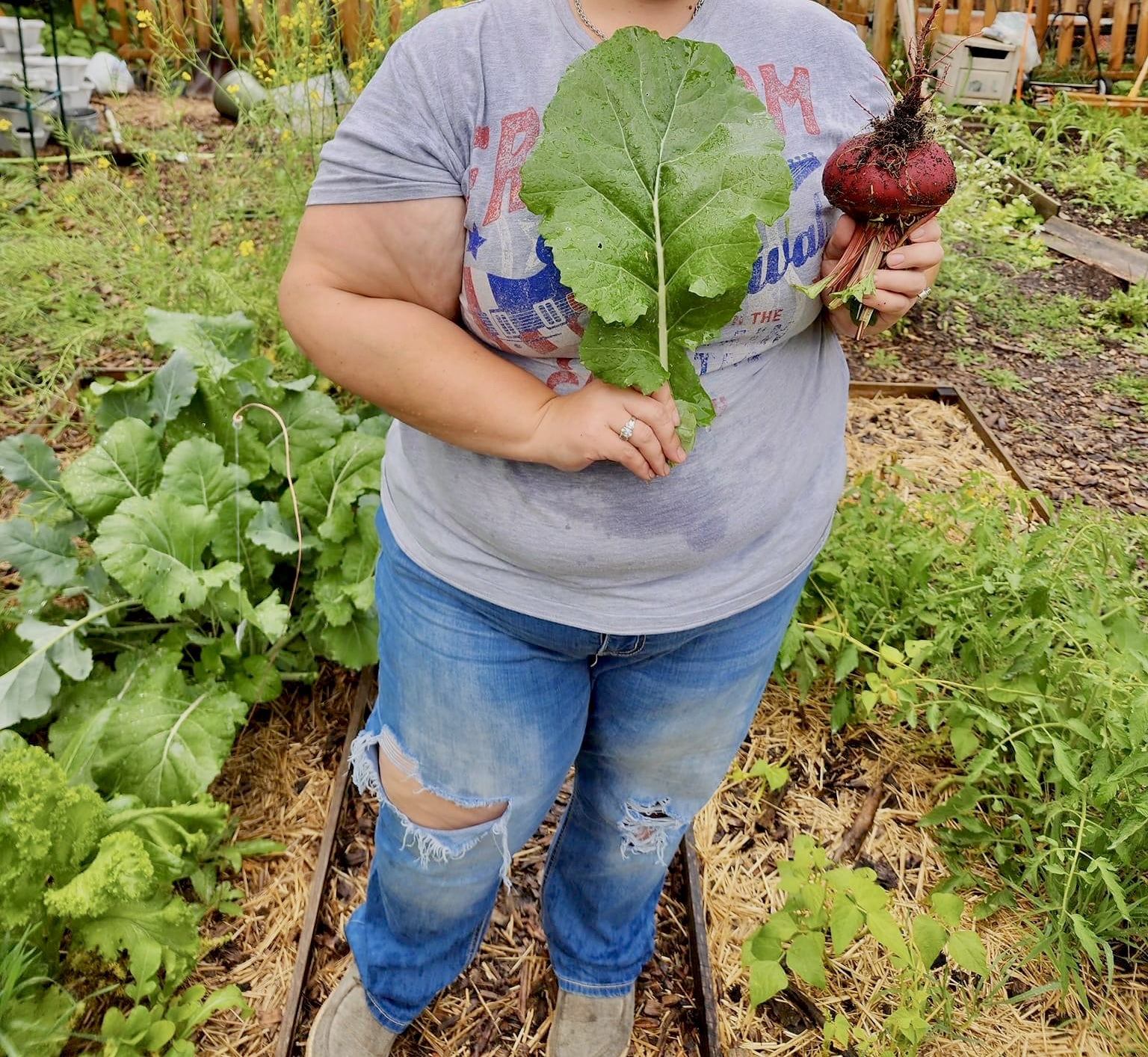
    Heather holds a large Detroit Red Beet and a large leaf Kale while standing in her garden
    Heather holds a large Detroit Red Beet and a large leaf Kale while standing in her garden.

    Carbon drawdown refers to the process of removing carbon dioxide from the atmosphere and storing it in natural systems like soil, forests, and oceans. Carbon drawdown is critical for mitigating the impacts of climate change, and urban permaculture can play an important role in this process. Urban permaculture is a way of designing and managing urban spaces to mimic the natural systems found in healthy ecosystems. By using permaculture principles, we can create urban landscapes that are not only productive and beautiful but also contribute to carbon drawdown. Each thing we do has an impact on the environment around us. Here’s how urban permaculture can help with carbon drawdown:

    Soil Building

    Healthy soil is a key component of carbon drawdown, as it can store large amounts of carbon in the form of organic matter. Urban permaculture can help build healthy soil by using techniques like composting, cover cropping, and no-till gardening. Composting organic matter like food scraps, leaves, and grass clippings can help build healthy soil that stores carbon. Cover cropping involves planting crops like legumes or grasses that fix nitrogen and add organic matter to the soil. No-till gardening involves reducing or eliminating tilling, which can disrupt soil structure and release carbon. We mix all of these techniques in addition to heavy mulch adding even more carbon material back into the soil. By building healthy soil, urban permaculture can contribute carbon drawdown while also increasing soil fertility and plant productivity.

    Agroforestry

    Agroforestry is a land management system that combines trees and crops on the same piece of land. This system can contribute to carbon drawdown by sequestering carbon in trees and soil, reducing greenhouse gas emissions from agriculture, and increasing biodiversity. Urban permaculture can incorporate agroforestry techniques like planting fruit trees, using intercropping, and creating food forests. Each of our fruit and nut trees have companion plants around them in clusters called guilds. These guilds work together with the trees to increase yields and build the soil. Any combination of these techniques can help reduce the carbon footprint of urban food production while also providing food, shade, and habitat for wildlife.

    Carbon Farming

    Carbon farming involves using agricultural practices that increase carbon sequestration in soil and vegetation. Urban permaculture can incorporate carbon farming techniques like alley cropping, rotational grazing, and silvopasture. Alley cropping involves planting crops between rows of trees or shrubs, which helps reduce soil erosion, increases soil fertility, and sequesters carbon. Rotational grazing involves moving livestock between different grazing areas. This can help improve soil health and increase carbon storage in grasslands. While most urban areas have limited ability to include livestock, it is not completely out of the question.

    On our farm, we raise chickens that we free range during the day. This allows them to eat bugs that would otherwise harm the garden. But it also means they will scratch the ground allowing carbon deeper into the soil. Moving livestock also allows their manure to be deposited over a wider area, again encouraging healthy soil. Silvopasture involves integrating trees and livestock on the same land, which can provide multiple benefits like increased carbon storage, improved animal welfare, and higher crop yields. While silvopasturing may not be an option in all urban settings, it is certainly worth doing where possible.

    Urban Greening

    Urban greening refers to the process of adding vegetation to urban areas like parks, rooftops, and public spaces. We can contribute to carbon drawdown by using urban greening techniques like creating green roofs, installing vertical gardens, and planting trees. Green roofs and vertical gardens can help reduce the urban heat island effect, increase biodiversity, and sequester carbon. Planting trees in urban areas can help reduce air pollution, provide shade and cooling, provide food, and sequester carbon. The more areas in a city that can have living plants, the better.

    In conclusion, urban permaculture can play an important role in carbon drawdown by using any combination of the techniques in this article. By creating urban landscapes that mimic natural systems and contribute to carbon storage, we can mitigate the impacts of climate change while also creating productive and beautiful urban spaces. Urban permaculture offers a sustainable and regenerative approach to urban design that benefits both people and the planet. Remember, permaculture is not a sprint, but a marathon. We’ve been building our urban farm for 3 years, and continue to improve every week. Each step a family can take to move towards a greener life helps the planet breathe a little easier.

  • Urban Farm Composting Made Simple

    Urban Farm Composting Made Simple

    Composting is the process of breaking down organic materials like food scraps, yard waste, and other organic matter into a rich soil amendment that can be used to improve the health of your garden. Composting is an easy and eco-friendly way to reduce waste and improve the health of your plants. There are several different types of garden composting methods that you can use depending on your space, time, and resources. You can listen to Heather talk about composting in Season 1 Episode 14.

    Here are a few of our favorite types of garden composting and how you can get started with them today.

    Traditional Composting

    Traditional composting is the most common and well-known method of composting. It involves creating a pile of organic matter in a designated area and allowing it to decompose over time. Traditional composting requires a mix of “greens” (nitrogen-rich materials like grass clippings and vegetable scraps) and “browns” (carbon-rich materials like leaves and paper) to create the ideal balance for decomposition. The pile should be turned regularly to aerate it and allow the organic matter to decompose evenly. Traditional composting can take several months to a year to produce usable compost, but it’s a great way to create a large amount of compost at once. We use a large 2 bin system that is made entirely from reclaimed wood. This method works great if you have space for the pile.

    Vermicomposting

    Vermicomposting involves using worms to break down organic matter into compost. Worms consume the organic matter and excrete castings, which are rich in nutrients and beneficial microorganisms. Vermicomposting can be done indoors or outdoors, and is ideal for small spaces like apartments or balconies. To start vermicomposting, you’ll need a bin, bedding materials like shredded newspaper or cardboard, and worms. The worms can be purchased online or at a local garden center. We use red wiggler worms in our vermicomposting setup because they are the most efficient at breaking down material. Vermicomposting produces compost faster than traditional composting, typically within 2-3 months. This method works great for small spaces, and is less labor intensive than traditional composting.

    Sheet Composting

    Sheet composting, also known as lasagna gardening, involves layering organic materials directly on top of your garden bed. The layers can include things like leaves, grass clippings, kitchen scraps, and other organic matter. The layers should be watered to encourage decomposition, and over time the organic matter will break down and create compost. We use this method as well here at Hogs and Hens Urban Farm. We have had great results from layering the material and allowing nature to take its course. Sheet composting is a great way to build soil fertility and structure over time, and it can be done year-round. It’s also a great way to convert an unused or weedy garden bed into a productive growing space.

    Trench Composting

    Trench composting involves digging a trench in your garden bed and filling it with organic matter. The organic matter is then covered with soil and left to decompose. As the organic matter decomposes, it will enrich the soil and improve the health of your plants. Trench composting is a great way to add organic matter to your garden bed without having to move a large amount of compost around. It’s also a great way to add nutrients directly to the root zone of your plants. We employ this method in our hügelkultur beds but because this method requires digging, it is more labor intensive. This method is best if you have a large area to dig your trenches.

    In conclusion, there are several different types of garden composting methods that you can use to create rich, nutrient-dense compost for your garden. We covered just a few of them today, and will cover more options in future articles. Whether you choose traditional composting, vermicomposting, sheet composting, or trench composting, the key is to create a balance of greens and browns, turn or mix the pile regularly, and keep it moist to encourage decomposition. With a little patience and effort, you can create a thriving compost pile that will help you grow healthy, vibrant plants in your garden. If you’re looking to get started in Urban Permaculture, check out this article Starting Urban Permaculture: How to Create a Sustainable Garden in the City for a simple guide to getting started!

  • Starting Urban Permaculture: How to Create a Sustainable Garden in the City

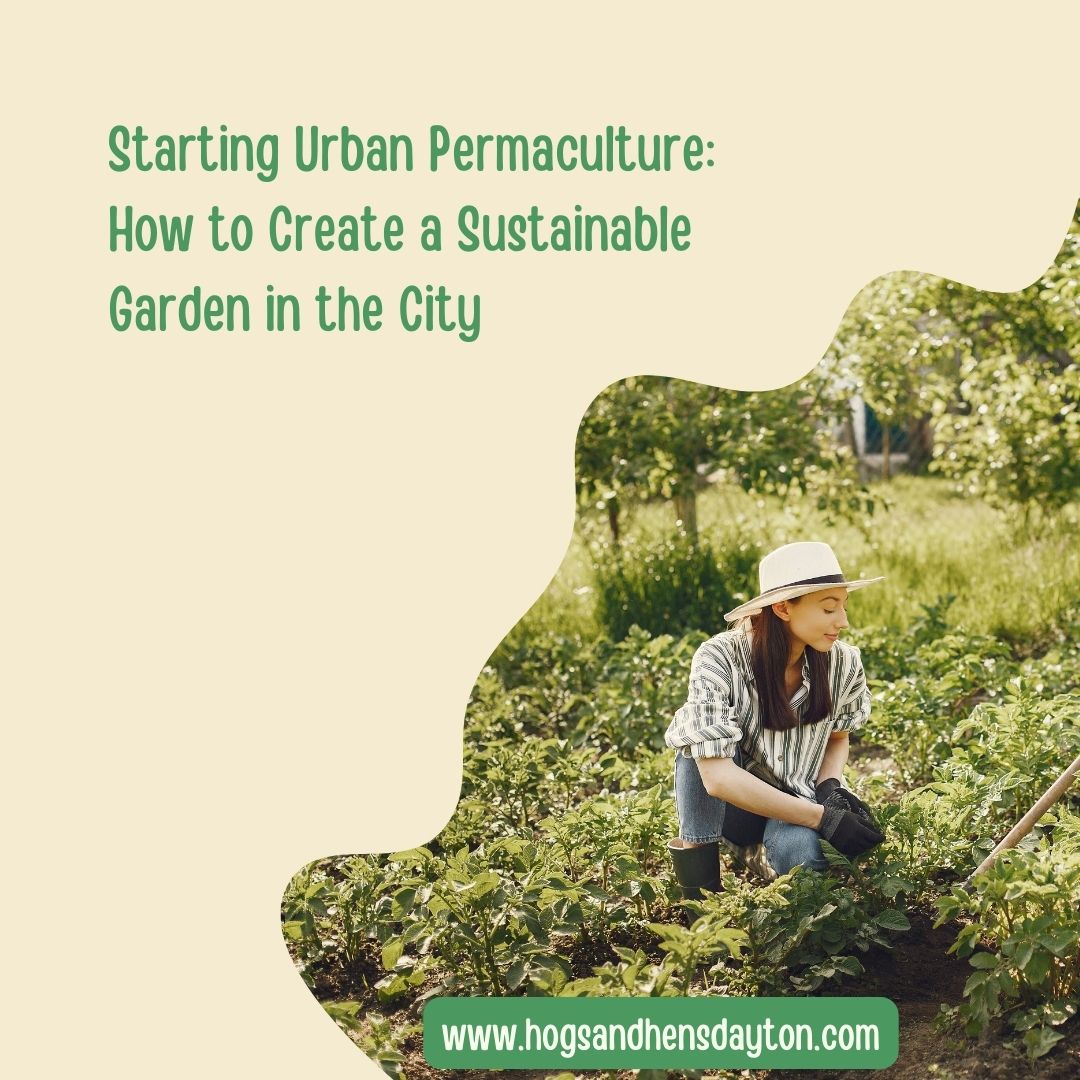
    Starting Urban Permaculture: How to Create a Sustainable Garden in the City

    Permaculture is a sustainable and holistic approach to gardening that aims to create a self-sustaining ecosystem that produces food and other resources. While permaculture is often associated with rural areas, it’s also possible to create a permaculture garden in an urban environment. In fact, urban permaculture is becoming increasingly popular as more people seek to grow their own food and reduce their environmental impact. Here are some tips for starting your own urban permaculture garden. We started small with one little planter box, and now we have a huge garden! Read on to learn more ways you can get started today!

    Assess Your Space

    The first step in starting an urban permaculture garden is to assess your space. Consider the amount of sunlight your space receives, the type of soil you have, and the size of your space. Even small spaces like balconies and rooftops can be used to create a permaculture garden. Think creatively about how you can make the most of your space, whether that means using vertical space, creating raised beds, or using containers.

    Choose Your Plants

    When choosing plants for your urban permaculture garden, look for plants that are well-suited to your climate and soil type. Consider planting a mix of annual and perennial plants, including fruit trees, shrubs, and vegetables. In permaculture, diversity is key, so aim to plant a mix of plants that support each other and create a self-sustaining ecosystem.

    Incorporate Companion Planting

    Companion planting is a technique that involves planting different plants together that have mutually beneficial relationships. For example, planting marigolds with tomatoes can help repel pests, while planting beans with corn can help fix nitrogen in the soil. Incorporating companion planting into your permaculture garden can help create a healthier and more sustainable ecosystem.

    Build Healthy Soil

    Healthy soil is the foundation of any successful permaculture garden. In urban areas, the soil is often depleted or contaminated, so it’s important to build healthy soil by adding organic matter, compost, and other soil amendments. You can also consider using raised beds or container gardens filled with healthy soil to ensure that your plants have the nutrients they need to thrive. Here at Hogs and Hens Urban farm, we use a mixture of raised beds, and planting directly in the ground. In both cases, we are very careful to build strong and healthy soil.

    Use Sustainable Practices

    Permaculture is all about sustainability, so it’s important to use sustainable practices in your garden. This includes using organic fertilizers and pesticides, conserving water, and reducing waste. You can also incorporate sustainable practices like rainwater harvesting, composting, and using recycled materials in your garden. We make it a point to reduce, reuse, and recycle as much as possible. Many of the projects here at Hogs and Hens are created using reclaimed materials. Get creative with ways to reduce your single use item purchases!

    Continuously Learn and Adapt

    Permaculture is a lifelong learning process, so be prepared to continuously learn and adapt as you create your garden. Join a local permaculture group, attend workshops and conferences, and read books and blogs to learn more about permaculture and how to apply it in an urban environment. Don’t be afraid to experiment and try new things, and be open to adapting your garden as needed. Be sure to find us on Facebook and ask any questions you may have along the way. We’ve found that learning by networking has been a game changer for our farm!

    In conclusion, starting an urban permaculture garden is a great way to create a sustainable and self-sustaining ecosystem in the city. By assessing your space, choosing the right plants, incorporating companion planting, building healthy soil, using sustainable practices, and continuously learning and adapting, you can create a beautiful and productive permaculture garden that supports both you and the environment.

  • 5 Tips for Growing Lush Gardens in a Limited Area

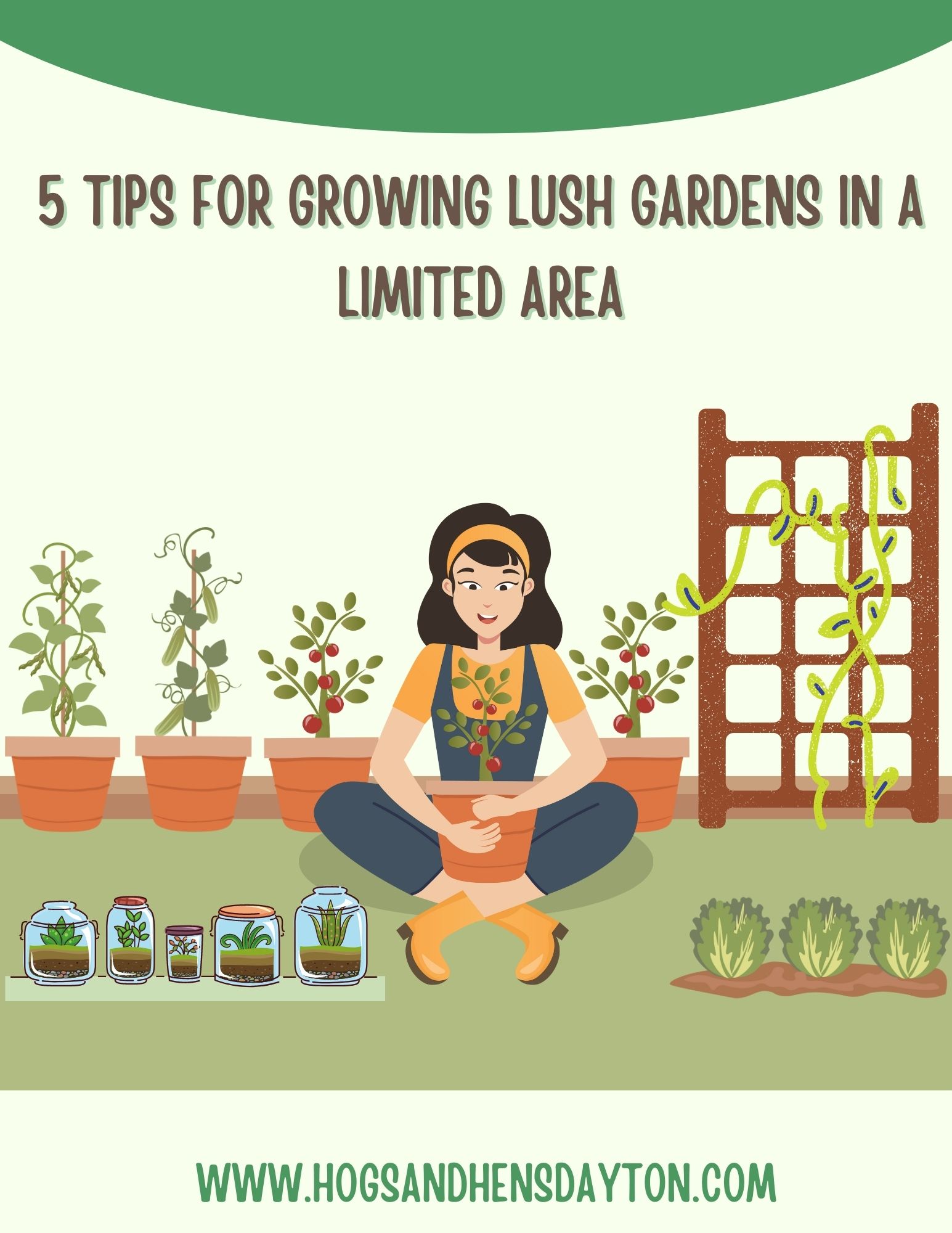
    5 Tips for Growing Lush Gardens in a Limited Area

    Growing in a small space is made easier with these 5 tips

    Gardening is a wonderful way to connect with nature, improve your mood, and get some exercise. However, if you live in a small apartment, condo, or house with limited outdoor space, you may think that gardening is not an option. The good news is that you don’t need a large backyard to enjoy the benefits of gardening. With a little creativity, you can create a lush and thriving garden in even the smallest of spaces.

    1- Choose the Right Plants

    When gardening in small spaces, it’s important to choose plants that are well-suited for your space. Look for plants that are compact, have a small footprint, and can be grown in containers. Some great options include herbs, small vegetables, succulents, and dwarf fruit trees. You can also consider growing vertical plants like climbing vines, trellises, or wall-mounted planters to maximize your space. Be sure to chose varieties of plants that are non-invasive. When growing in a small space, or any space, you don’t want to worry about invasive plants taking over!

    2- Optimize Your Containers

    Choosing the right containers is essential when gardening in small spaces. Look for containers that are the right size for your plants and space. Containers made of lightweight materials like plastic, resin, or fiberglass can make it easier to move your plants around. You can also opt for hanging baskets or wall-mounted planters to save floor space. Be sure to sanitize your containers before planting to prevent diseases in your new garden.

    3- Use Vertical Space

    Vertical gardening is a great way to maximize your growing space. You can use walls, fences, or trellises to grow climbing plants like cucumbers, tomatoes, and beans. You can also create a living wall by mounting containers on a trellis, fence or mesh panel. If you’re short on floor space, consider investing in a vertical garden system like Mr. Stacky that allows you to stack plants on top of each other.

    4- Make the Most of Your Sunlight

    When gardening in small spaces, it’s important to make the most of your available sunlight. Make sure your plants are getting enough light by placing them near a window or on a balcony that gets plenty of sun. If you don’t have access to direct sunlight, you can invest in grow lights that simulate natural sunlight. Grow lights are a great option for indoor gardening and can help you grow plants year-round.

    5- Take Care of Your Plants

    Just like any other garden, plants in small spaces require proper care and maintenance. Water your plants regularly and make sure they are getting the right nutrients. Fertilize your plants every few weeks to help them grow and thrive. Monitor your plants for signs of pests or disease, and take action quickly to prevent problems from spreading.

    In conclusion, gardening in small spaces is not only possible but also rewarding. Make sure to listen to Episode 13 of The Urban Permaculture Podcast for more tips and tricks for small space permaculture! With the right plants, containers, and care, you can create a beautiful garden that will brighten up your space and improve your mood. So, don’t let a lack of outdoor space stop you from gardening – get creative and start growing today!

  • Episode 10: Tools and Materials on a Dime

    Episode 10: Tools and Materials on a Dime

    The Urban Permaculture Podcast Logo
    Episode 10 is all about tools and building materials on a budget.

    In this episode of The Urban Permaculture Podcast, Bob talks about tools that are really helpful around the farm. He goes into detail about sourcing the different tools discussed and some of the things to look out for when buying used tools.

    Garage Sales

    Auctions/Estate Sales

    Pawn Shops** Be careful of pricing!

    Craigslist/Marketplace/Online Garage Sales

    Ask friends/barter

    Make your own

    Modify an existing tool

    Next up, Bob talks about finding materials on a budget. From sourcing pallets, to purchasing lumber at a reduced rate, Bob gives a nice list of options to explore as you begin to build things on your homestead.

    Pallets – Great to use but the wood is often splintered and/or treated so be careful of chemicals that can leach into your soil!

    Hardware Stores

    Farm Supply Stores

    Small Businesses

    Bix Box Stores

    Friends

    Other lumber options

    Old Fencing

    Demo/construction cleanup

    Barn teardowns

    Cull Carts/Off Cuts from your local lumber carrier

    Heather then discusses some of the projects around Hogs and Hens Urban Farm that have been completed using tools and materials sourced this way. She also talks about reducing waste streams and how this can help reduce methane production from landfills.

    Below are links to the tools Bob discussed:

    Dewalt Cordless Drill

    Dewalt Cordless Circular Saw

    Speed Square

    Tape Measure

    Mitre Saw

    Table Saw

    Nail Gun (Brad Nailer)

    Nail Gun (Finish Nailer)

  • Episode 1: Introduction to Hogs and Hens Urban Farm

    Episode 1: Introduction to Hogs and Hens Urban Farm

    Welcome to our very firsts episode of The Urban Permaculture Podcast! You can find The Urban Permaculture Podcast on all major podcasting platforms such as Spotify. To listen on Spotify click HERE.

    In this episode, Heather talks about all of the things we are currently doing and currently have planned for Hogs and Hens Urban Farm.

    Currently, Hogs and Hens Urban Farm raises a huge variety of fresh vegetables, fruits, and herbs. In addition to that, we currently have a worm farm set up to make our own organic compost through vermicomposting. We are adding a flock of laying hens to our farm in the spring of 2023, as well as expanding to include an apiary where we will be raising honey bees. In addition to these, we have a small ornamental pond on the property with a variety of comets living inside it to help prevent mosquito breeding.

    We recently purchased two vacant lots that are connected to our current property and we are beginning our very own permaculture food forest on that property that will include fruit and nut trees, expand our berry patches, and have large areas of perennial edible plants. We will also be adding a pond to this property at a later date.

    Hogs and Hens uses integrated pest management practices in addition to employing a no till method of gardening. Everything you find on our farm is organically grown, and we create our own compost to use to amend our soil.